November 24, 2010

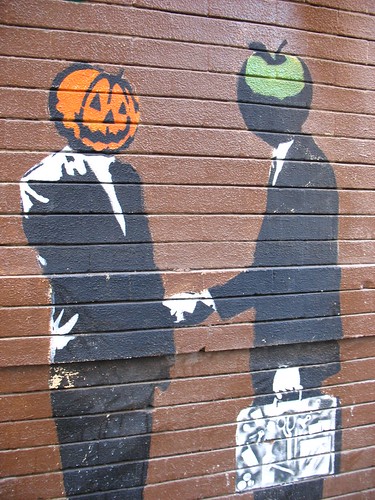
iTunes! The Beatles! Downloading! Exclamation marks!

itunes-logoabbey roadexclamation mark

You seem to be web-savvy enough to be reading this blog, so I'm going to assume you've heard all the furor about The Beatles over the last 10 days. Yes, The Beatles have finally released their catalogue of music on iTunes, seemingly ending decades of feuds between Apple Corps (the company owning of much of the rights to The Beatles music) and Apple Inc. (Steve Jobs' computer monster that originally signed a deal to never be involved in music.)

With all the delays in the 'launch' (the iTunes Store went live in 2003, and digital music has been around longer than many music consumers), I wondered if it was a case of too little, too late. Nielsen Soundscan released the figures yesterday, and in the first seven days, The Beatles sold over 2 million singles and more than 450,000 albums. Quite a lot. Well, kinda.....

I'm not a die-hard Beatles fan, but I own 4 of their albums on CD or 12" vinyl. I'm not in a rush to go out and sweep up another 4 or 5 digitally, especially when Amazon played along and dropped the prices of all the remastered Beatles albums on CD to a competitive $7.99 each. I'm sure I'll pick up another one or two at that price soon, but right now I have been sidetracked by their Thanksgiving week sale, where they have slashed prices on various digital albums to just $1.99 each. So far I have picked up LPs from John Legend & The Roots, Gorillaz, Belle & Sebastian, KT Tunstall, Vampire Weekend and more.

Before this starts sounding too much like a promotion for Amazon, my point is this... Album pricing needs to be drastically adjusted. At $1.99 I am (and many others are, i'm sure) sweeping them up: exploring new sounds, current trends and past hits of unknown artists. Discovering new music and taking a 'risk' is fun and easy. Yet, I don't know if the industry can sustain at that price point (at least, not with major labels and their costs involved.) Eight bucks for a CD? I'm still going to have to choose wisely, and just pick up one or two a month that are dead certain. I'm not risking too much - too many memories of being burnt by terrible LPs from the 90s ;)

$12.99 for a digital album that isn't full WAV or FLAC quality, and I may have bought in previous formats over the last 20 years, and could potentially rip a better quality recording from... I'll pass every time. If convenience is king (and, it is), it is not convenient for me to spend 52 bucks to 'replace' my Beatles collection with inferior quality audio, years after I bought the CD/vinyl.

Correcting this price point could inspire a whole new generation to buy a collection of Beatles albums. I'm not saying that younger music listeners aren't into them now, but chances are they ripped a copy of Sgt Pepper about 10 years ago. This year, there have been two much more headline worthy releases - Taylor Swift sold a whopping 1 million albums in the first week with her latest release, and Eminem topped off a $60m tour with another million sales of his 'Recovery' LP - going platinum in just two weeks.

With all the hype for the Beatles, and all the things this could have been, I feel it is much ado about nothing. And so... Apple (Inc. and Corps), if you halved the price per unit and sold twice as many units, would that have been a bad move?


Lee Jarvis.

(Previously posted at US Music Jobs' blog.)

If you enjoyed this post, you may like to subscribe to my RSS Feed, subscribe for Email Updates, or follow my Twitter Feed.

October 13, 2010

Sound and Health


(photo by Kim Marius Flakstad on Flickr)

Making records has always been part of a bigger picture for me. Learning how people react to music, the science behind acoustics, and music therapy have all been of interest. Understanding how sound works and affects the human brain may sound complex, but there are some basic principles that take the creative process in a different direction, and make sharing the right music at the right time more fun and enjoyable.

Edgard Varèse described music as 'organised sound', and many people would agree that 'un-organised sound' can be unpleasant and even painful. The relationship between sound and health is one that science and medicine are still unravelling, but offering to bring some of the basic understandings and theories, TED presented a talk from business sound expert Julian Treasure. Julian says that "our increasingly noisy world is gnawing away at our mental health -- even costing lives". He lays out an 8-step plan to soften this sonic assault (starting with those cheap earbuds) and restore our relationship with sound.

Something to bear in mind; this TED talk crammed a lot into 7 minutes. Some links and resources for his claims and ideas are shared via http://juliantreasure.blogspot.com/.


I would love to hear more on the subject from anyone involved in music research, lecturers, sound architects, or any other professional. Feel free to comment below...


Lee Jarvis.

(This was originally posted on the UK Music Jobs blog)


If you enjoyed this post, you may like to subscribe to my RSS Feed, subscribe for Email Updates, or follow my Twitter Feed.

September 17, 2010

Good Old Days


(photo via Ching Chiao)

They don't make them like they used to... records, that is. True or False?

Back when you had to pay $$$$ to use a record studio, if you were lucky enough to have one in your local area, you would only do so if you thought that you had something really worth working on. A label (even independent dance music labels) would only sign your record if they though it was worth them spending $$$$ on mastering and then pressing 3000 pieces of vinyl, and then distributing those promos nationwide and overseas for premium exposure.

Now, you can buy an entire software studio for $500, email your track to a digital label, who will likely release it because it often costs them nothing upfront and only a small percentage to their digital distributors.

This creates a cycle of chasing hits, and it is almost a numbers game of scooping up as many 'maybees' as possible, in the hope that one of them will stick. The ways that digital labels can now cut corners extend to not bothering with mastering a track, badly pasted together 'artwork', and, in my experience, rarely paying the artists, producers and remixers.

Does this mean that every digi-only label sucks? Not at all. It may mean that you have to pick your labels well. Research those in charge of it, who they distribute to, who they master with, do they take out online advertising to help you stand out from the 3000 other digital tracks in your genre being uploaded that week.

Labels that take 15 years to reach 130 releases, such as Freerange Records are real gems - they nurture artists, work on follow-up EPs and albums, and grow organically, thus producing loyal artists and fans.

Maybe they do make them like they used to, but the 'noise' of so many other songs being released by so many labels and artists (on scores of websites) makes "them" harder to find.

Sometimes, less is, often, more. Probably.


Lee Jarvis


If you enjoyed this post, you may like to subscribe to my RSS Feed, subscribe for Email Updates, or follow my Twitter Feed.

August 22, 2010

Metadata aka 'who the heck is this?'


(photo via jm3)

Metadata is (loosely, and applied to music) the information in a digital music file. It is data that is used "to enhance access and usage of content and provide information that computers are not yet able to interpret". It often identifies the artist, track title and album, but also can contain release artwork, genre, BPM, web links and anything else you would like the listener to know.

So, in the current climate where people share digital music and there is no telling where your latest track may end up....... why are so few artists adding metadata? Who is "Unknown Artist"? What is "Track 01"?

I am not entirely excluded from this, it took me a while of sending out badly-labeled mp3s to realise (discovering TuneUp helped me wake up to the issue). Promos I receive from labels are often full of information, ones from individual producers, far less so. As an independent artist, you should use this opportunity to share your contact info with the listener. Now, when I send out promos for my single track releases (as is often the case in dance music), I have taken to adding my email address within the 'album' field. Simple, and yet very effective if anyone new ends up with my track and wants to find out more. No label artwork for your unsigned cover song? How about a cool shot from the band's last live gig? How about a list of tour dates? How about a phrase such as 'free music at our website', and offering some free and some purchasable music at said site?

Here's the thing: People will go on P2P and torrent sites and download copies of your music for free. If you are the one posting high-quality files with full artwork, tour dates and links to buy the album on 12-inch LP, then yours are the files that will end up in the hands of music fans. At least with all the correct information at hand, they can make an informed decision about if they wish to contribute to your revenue stream in future.

Not only that, but if you are sending digital music to a radio station or magazine, and they download and open the music file, whilst simultaneously deleting your emaill and losing your Electronic Press Kit, they still know who the heck you are!


Lee Jarvis.

If you enjoyed this post, you may like to subscribe to my RSS Feed, subscribe for Email Updates, or follow my Twitter Feed.
August 16, 2010

Press Kits - Who, What, When, Where, and How?

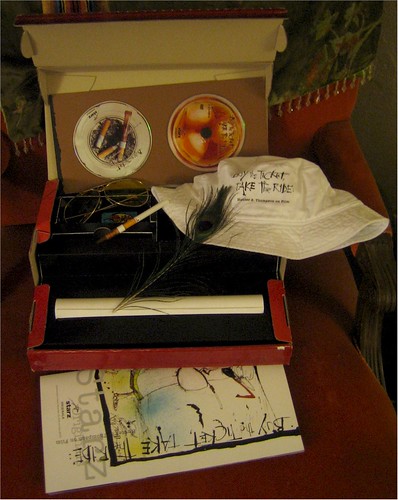
HST Press Kit - Inside
(Photo via smart went crazy)

Press Kits can be amazing. They can also be amazingly bad, or amazingly useless. To ensure you don't fall into the two latter categories, I thought I would share some basic information and advice.

WHO

Everyone from an individual acoustic artist, to a 49-piece orchestra, to a live event promoter, to a record label should develop a press kit to aid their promotional efforts and business deals.

WHAT

Content
There are many different elements you can add to a music press kit. Not all of them will be needed for every occasion, some will be situation specific. As Bob Baker says, "your goal should be to send only what is necessary and needed to accomplish your promotion objectives."

Break your content down into these four areas:
Text : Biography, Discography, Press Releases, Fact Sheet, Tour Dates, Song List, Equipment List, Famous Quotes / Endorsements, and more.
Images : Professional Photos, Live Performance Photos, Press Clippings, and more. Images should all be hi- and lo-res, for either print or web.
Audio : CD albums, Limited edition 7-inch coloured vinyl, Low bitrate mp3s for quick streaming, High bitrate audio files for download, and more.
Video : DVDs, Music Video, Live Performance Video, Behind The Scenes Footage, Interview Footage, and more.
Additional Inserts : USB Flash drives, T-shirts, coffee mugs, candy bars, pop-up storybook, or other RELATED items.

Theme
Having an inventive theme to your press kit and promotional material is a way to make it unique and stand out. A style or gimmick that suits the artist's music and image won't hurt at all, as long as any theme is related and appropriate! A record label for kids music? Think colourful, jack-in-the-box, cartoon animation, and Hello Kitty bubblegum style decoration. Chicago goth-metal band? Think stormy, unicolour city skyline images, sharp fonts, and blood-stains across your bio. Do not try and fuse the two.

WHEN
Read more...

August 09, 2010

Bad Publicity?


(Photo via Chrisjohnbeckett)

No such thing, right? Often, even bad press is good news.

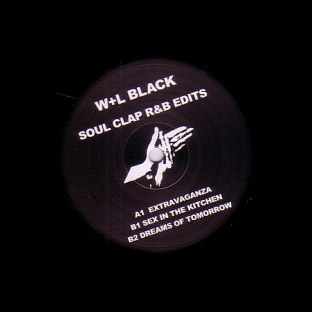
Browsing through music website Resident Advisor recently, I stumbled into the 'New Singles Review' area, and found an artist I generally liked, with a pretty bad review. It kicked off with "Whether or not a rehash of someone else's work is deserving of review is debatable." The review inspired 80 comments in three days (average for the site is anything from 2-20, depending on preceding reputation.) The comments ranged from disagreement ("track of the year so far"), to outrage, to confusion, to agreement ("total garbage"), to death threats (well, nearly, they are a feisty bunch at RA) to the profound "makes my nips hard".

Ultimately a LOT of people wanted to know what the fuss was all about; whatever your previous views on the artist at review (if any), you want to listen to the tracks at question and have your say. And now, by reading this, you want to listen to the track and figure out what the hell is going on... well there you go. There's no such thing as bad publicity (Disclaimer: in this case.)

Don't be put out next time you earn a bad review.

Soul Clap - R&B Edits

(Resident Advisor review)


Lee Jarvis.

If you enjoyed this post, you may like to subscribe to my RSS Feed, subscribe for Email Updates, or follow my Twitter Feed.

July 19, 2010

Chicago Promoters' Ordinance Kills Independent Music

chicago promoters ordinance jagoff

The good people of JaGoFF spend a lot of time on worthy causes. Over the last couple of years, Chicago has been under threat of an ill-conceived 'Chicago Promoters' Ordinance' and the JaGoFF crew have been raising awareness, pointing out the huge holes an ridiculous impact it would have. This Promoters' Ordinance, if passed into law, would effectively "drop a bomb on Chicago's independent music community, if not nuke it entirely." according to Jim DeRogatis at the Chicago Sun-Times.

To break it down:
*You would be required to submit to fingerprinting and background checks.
*If approved, you would be required to purchase a renewable license for $500 - $2000, even when working with a fully licensed venue.
*You must acquire $300,000 in liability insurance, even if working with a fully insured venue.
*You must notify chief of police seven days prior to event.
*The definition of "promoter" is vague and open to wide interpretation.
*The Ordinance targets the little guy while providing a big business exemption.

Although the Ordinance has currently been tabled, that does not mean it has disappeared; it can rear it's ugly head in a mutated form at any time. It has also inspired Philadelphia to try and construct an equally-ridiculous set of rules that will crush the independent creative community.

JaGoFF have filmed a documentary to prove it. Do yourself and everyone a favor - Watch it, embed it, download it, share it... DO SOMETHING about it.


The Chicago Promoters' Ordinance Kills Independent Music: A Documentary from the Street.
Part 01 of 07 (Head to The Record Industry's Youtube Channel for all seven parts)

Read more...

June 10, 2010

Creative Networking at Music Events


(Photo via Orin Zebest)

I've been to a couple of large music festivals in the last few months - first there was the Miami Winter Music Conference, and recently the Detroit Electronic Music Festival. Both were great places to meet up with old colleagues, DJ / producer / performing peers, and establish new contacts.

This got me thinking about networking among musicians. Such events are often spread across several days, and between the seas of new faces and wads of business cards, it can all get a bit confusing. Don't do what I did in Miami: When people ask "What are you working on now?", you say, "erm... I've nearly finished an EP and it is kinda pitched down but deep and like 80s influenced but still dubby and groovy". Take CDs, or USB sticks, or free download cards. You want to go, "BAM. Here's where I'm at, what I sound like and how you can find more of me". Being organised (unlike myself) and having something slightly different to give out on your travels will often go a long way. One of the best examples I saw of this was from house music DJ/ Producer Joshua Iz, who printed out specific cards for the Miami event. Giving your potential collaborators or consumers an extra reason to hold on to them is a smart move too...


Exhibit one...
Read more...

June 08, 2010

DEMF 2010 in Photos

This past weekend I hit the road to Detroit to check out the 10th year of the Electronic Music Festival. Now going by the name of 'Movement', the event is three days of electronic techno goodness. All photos (c) Lee Jarvis. All Rights Reserved.

DAY 1

lee jarvis demf 1 jamie jones
Jamie Jones

lee jarvis demf 3 theo parish.lee jarvis demf 2 matthew richie hawtin.lee jarvis demf 4 josh wink
Theo Parrish // Matthew and Richie Hawtin // Josh Wink

lee jarvis demf 5 plastikman
Plastikman

lee jarvis demf 6 plastikman.lee jarvis demf 7 plastikman.lee jarvis demf 8 plastikman
Plastikman // Plastikman //Plastikman

Read more...

May 05, 2010

Lee J the DJ Apr'10 - Deep House, Presentations and Clouds


April kicked off with a gig here in Chicago - Mi Casa Su Casa @ Between Lounge. Giom and Mes were here on tour from London and San Fran, and so they came along to hang out. Very cool night, i played it nice and deep and techy, after some great music from Greg K. Hope to be back there again, I love that vibe and that sound.


Read more...